

Bankruptcy knowledge
Overview of business recovery and bankruptcy
Rehabilitation and bankruptcy are two legal mechanisms applied when businesses and cooperatives face serious difficulties in their ability to pay their debts. Current law not only focuses on handling and liquidating assets but also creates mechanisms for businesses capable of continuing operations to recover, thereby protecting the legitimate rights and interests of businesses, employees, creditors, and other stakeholders.
What does it mean to be insolvent?
According to the Bankruptcy and Recovery Law of 2025, enterprises and cooperatives are considered...
insolvency
when a debt is not paid by the due date.
6 months from the payment due date.
Accurately determining the extent of insolvency is the basis for considering the application of rehabilitation or bankruptcy procedures as prescribed by law.
Business recovery
Recovery is a mechanism designed to help businesses overcome insolvency and continue operating.
Businesses can develop recovery plans with measures such as reorganizing operations, mobilizing resources, restructuring obligations, and planning for debt repayment.
Business bankruptcy
Bankruptcy is the state in which a business or cooperative is unable to pay its debts and has
court's decision to declare bankruptcy.
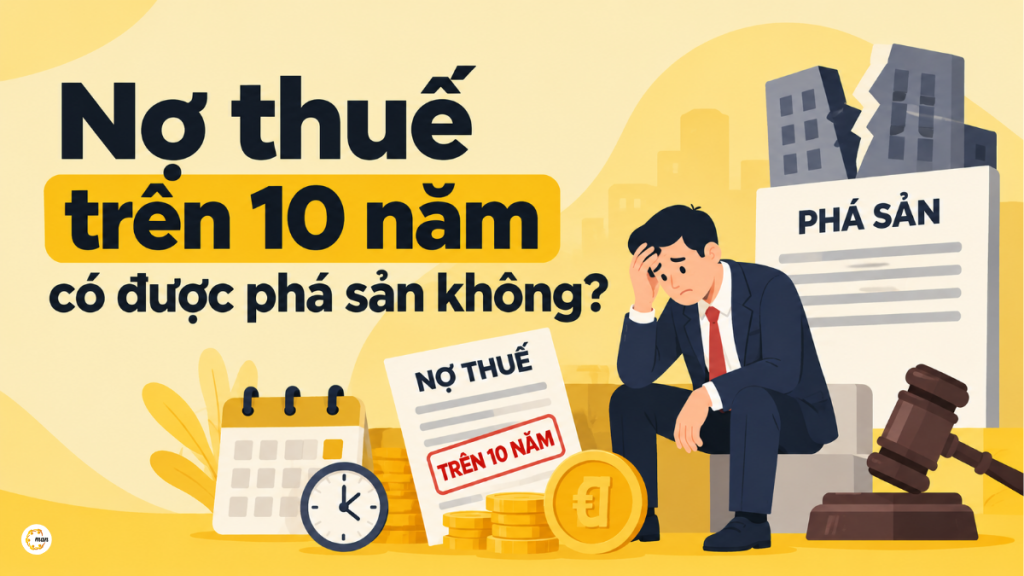
Therefore, a business experiencing financial difficulties or failing to pay a debt does not necessarily mean that the business has gone bankrupt.
What is the difference between recovery and bankruptcy?
-
Recover:
The goal is to overcome insolvency and continue operations. -
Bankrupt:
Established when the court issues a decision declaring the enterprise or cooperative bankrupt. -
Recovery plan:
Focus on generating cash flow, managing obligations, and maintaining operations. -
Bankruptcy proceedings:
Focus on resolving the case, handling assets and the rights of creditors in accordance with regulations.
Financial difficulties do not necessarily mean that businesses must immediately choose bankruptcy. Assessing recovery potential, asset structure, liabilities, and cash flow is crucial in determining the appropriate course of action.
Parties involved and procedures in bankruptcy proceedings.
Rehabilitation and bankruptcy proceedings involve multiple parties with varying rights and obligations. Depending on the specific circumstances, a business may be considered for business resumption or continue to be processed through bankruptcy proceedings.
Asset handling and streamlined bankruptcy procedures
After bankruptcy proceedings are initiated, managing and disposing of assets is crucial for fulfilling obligations to creditors. In certain cases that meet legal requirements, a business may be eligible for expedited bankruptcy proceedings to simplify and shorten the resolution process.
Asset management and disposal
The company's assets are inventoried, verified, and processed according to regulations to generate funds to fulfill its obligations in bankruptcy proceedings.
Inventory and valuation of assets:
Review and fully identify all assets belonging to the enterprise and the value of each type of asset.
Asset recovery and disposal:
Perform the necessary tasks to preserve, recover, and dispose of assets in accordance with regulations.
Liquidation and distribution:
Assets are liquidated and distributed to fulfill obligations in the order and according to the principles prescribed by law.
Simplified bankruptcy procedure
The simplified bankruptcy procedure is applied when a business falls under one of the cases stipulated by law and meets the corresponding conditions.
Number of creditors and total debt:
The business has no more than 20 unsecured creditors and the total principal debt is within the legally prescribed limit.
Small or micro-enterprises:
This falls under the cases where the law permits the application of simplified bankruptcy procedures.
Other cases:
Simplified procedures may be applied in other special cases under the Bankruptcy and Recovery Law 2025.
The application of simplified bankruptcy procedures should be determined based on the actual situation of the business and the legal conditions at the time of implementation.
Frequently Asked Questions about Business Bankruptcy
Below are some frequently asked questions regarding business recovery, bankruptcy, and the current procedures for handling insolvent businesses.
Frequently Asked Questions
What is VAT?
Content goes here...
What are the current VAT rates?
Content goes here...