


Corporate restructuring is a challenging but crucial process for organizations to adapt to the ever-changing market. In the economic landscape of 2026, where artificial intelligence and the green economy are reshaping the rules of the game, understanding and correctly applying corporate restructuring methods will not only help your organization survive but also thrive.
Overview of corporate restructuring

Business restructuring is understood as the process of fundamentally changing the core components of an organization, from financial structure and personnel to operational processes and business strategy. Unlike minor adjustments, the selection process... business restructuring methods Achieving this requires a systems thinking approach and a long-term strategic vision from leadership to optimize core competencies.
According to Deloitte's survey on global business transformation trends in 2025, as many as 781 TP3T organizations successfully restructured by seamlessly combining financial reform and process digitalization. This demonstrates that the intersection of key internal factors is crucial for creating new value for customers and shareholders in all business restructuring approaches.
Financial restructuring methods
For businesses facing cash flow pressures or with suboptimal capital structures, financial restructuring is often the preferred approach. The core objective is to "clean up" the balance sheet, free up frozen capital, and improve liquidity to create room for profitable investments.
Below is a comparison table of popular financial solutions to give you an overview of the advantages and disadvantages of each option in this business restructuring method.
| Financial solutions | Main advantages | Implementation challenges |
|---|---|---|
| Debt Restructuring | Reduce short-term liquidity pressure and avoid the risk of bankruptcy. | Requires a high degree of consensus from creditors and banks. |
| Converting debt into equity | Eliminate the burden of debt and rapidly increase equity capital. | Diluting the ownership rights of existing shareholders. |
| Issuing additional shares | Attracting new capital does not put pressure on loan interest payments. | It depends on the performance of the stock market and investor confidence. |
| Liquidation of non-core assets | Focus resources on the most profitable business segment. | We may lose future advantages if we don't plan carefully. |
After implementing the above solutions, businesses need to focus on establishing a rigorous cost control system to ensure that the new capital is used for its intended purpose and generates the highest possible return on operating cash flow.
Debt and capital restructuring
Businesses often proactively negotiate with financial partners to extend debt repayment periods, lower interest rates, or convert debt into equity (Debt-to-Equity Swap). This is a wise move when a business has growth potential but is temporarily stuck in a liquidity crisis, helping the restructuring process achieve financial stability quickly through optimizing the debt structure.
Increase or decrease charter capital
According to the 2020 Enterprise Law, businesses have the right to adjust their capital size to match their actual operating capacity. Increasing capital helps expand new projects, while reducing capital is a solution to return excess capital to shareholders when the scale shrinks, helping to optimize the ROE (return on equity) in a professional and transparent manner.
Organizational and personnel restructuring methods
The strength of a business lies not in its massive size but in its leanness and responsiveness. Organizational restructuring focuses on redesigning the "muscle" to best support the value chain and overall business strategy.
To better understand the differences between the currently popular organizational models, you can refer to the comparison table below.
| Organizational model | Key features | Suitable for |
|---|---|---|
| Functional model | Focus on specialization within each department. | Small and medium-sized enterprises, single-product businesses. |
| Matrix model | Combining functional management and project management. | Multinational corporations and complex projects require a high level of coordination. |
| Agile model | Strong decentralization to self-governing groups, enabling extremely rapid response. | Technology companies, startups, or innovative businesses. |
Each model has its own advantages, and choosing the right model is a crucial turning point in your business restructuring approach to eliminate management bottlenecks. Specific personnel restructuring is often carried out through the following actions.
- Implement the OKR and KPI management system to accurately quantify each individual's contribution to the organization's overall goals.
- Merging departments with similar functions aims to reduce intermediaries and accelerate decision-making across the system by streamlining the organizational structure.
- Focus on retraining existing staff to master new technologies instead of simply cutting staff.
According to a McKinsey report, organizations that adopt agile governance models and OKR metrics in their business restructuring approach are able to achieve strategic goals 30% faster than traditional models due to the synchronization of thinking and action.
Business restructuring methods
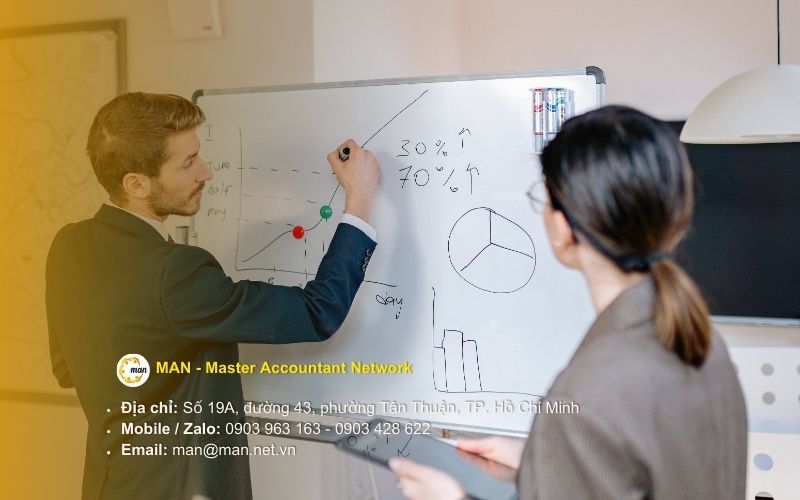
The business environment in 2026 demands that businesses constantly ask themselves: "Is this business model still valuable?" Restructuring the business through adjusting core operations is the answer to finding new growth paths and repositioning the brand.
Adjusting business strategy and model
Instead of simply selling products, many businesses are shifting to platform-based business models or providing comprehensive solutions. This shift from purely B2B to a hybrid model diversifies revenue streams and mitigates risks associated with market fluctuations, demonstrating the effectiveness of business restructuring in adapting to the digital business environment.
Review product portfolio and markets.
We recommend that businesses use the BCG matrix to scientifically analyze their investment portfolios. The bold decision to discontinue "dog" (low-performing) product lines and focus resources on "star" products is a painful but necessary step to preserve the vitality of the entire system during the corporate restructuring process.
Operational process restructuring method
Outdated processes are the biggest barrier to innovation. This approach aims to build a smooth, error-free, and high-performance business operating system through the support of modern technology solutions such as ERP or CRM.
Operational optimization processes are often accompanied by the adoption of sustainable international governance standards, which helps to strengthen the approach to successful business restructuring.
- Implement Lean and Six Sigma philosophies to eliminate seven common types of waste in manufacturing and service delivery.
- Robotic process automation (RPA) for repetitive tasks such as data entry, invoice reconciliation, or inventory management.
- Utilizing Big Data to forecast market demand, thereby optimizing inventory levels and global supply chains.
Legal and ownership restructuring methods
Mergers and acquisitions (M&A) are powerful tools in this corporate restructuring method. Changing the legal structure allows businesses to leverage the strengths of their partners or professionally withdraw from areas that are no longer suitable.
To ensure safety and compliance with the law, businesses need to be aware of the following conversion procedures.
- Mergers and consolidations: To create an entity with larger financial scale and market share, increasing global competitiveness.
- Business division and separation: This allows subsidiary businesses to operate independently and makes it easier to raise capital from specialized investors.
- Strategic equity investment: Attracting investors who share the ESG (Environmental, Social, and Governance) vision to enhance the company's value.
Standard corporate restructuring process
A successful corporate restructuring campaign is never the result of improvisation. It requires a clear, transparent, and decisive six-step roadmap from start to finish to ensure compliance and consistency.
- Step 1: Assess the current situation. Use SWOT analysis and a financial health review to identify the root causes of stagnation.
- Step 2: Set goals. Clearly define the specific financial indicators that the organization will achieve after implementing the business restructuring method.
- Step 3: Develop an implementation plan. Assign responsibilities to a task force, including financial experts, human resources professionals, and legal advisors.
- Step 4: Internal communication. Clearly explain the purpose of the change to build consensus and reduce psychological barriers among employees.
- Step 5: Implementation and Monitoring. Implement changes according to the roadmap and use modern management tools to track actual progress.
- Step 6: Standardize the new culture. Acknowledge initial successes, adjust processes, and integrate new values into the operational culture.
Legal regulations to note
No matter how effective a business restructuring method may be, it must operate within the national legal framework. Violating these regulations can lead to serious legal consequences and damage to market reputation.
Businesses need to pay particular attention to current legal documents when implementing corporate restructuring methods.
- Law on Enterprises 2020: Procedures for increasing and decreasing charter capital, changing the legal representative, and internal governance structure.
- Securities Law 2019: Regulations on share offerings and mandatory information disclosure for listed companies.
- Competition Law 2018: Regulations on economic concentration to avoid monopolies when carrying out mergers and acquisitions.
- Bankruptcy Law 2014: Provides business recovery options for entities that are unable to pay their debts when due.
Understanding and flexibly applying business restructuring methods is the foundation for building a sustainable and prosperous organization. Hopefully, these in-depth insights will provide you with a practical perspective and useful guidance on your journey to revitalize your business in 2026.
Contact information for MAN – Master Accountant Network
- Address: 19A, 43rd Street, Tan Thuan Ward, Ho Chi Minh City
- Mobile/Zalo: 0903 963 163 – 0903 428 622
- Email: man@man.net.vn
Other services
- Auditing: Auditing Services, Construction Auditing Services, Financial statement audit services
- Accounting and Taxation: Tax accounting services, Tax report, Transfer Pricing Advisory. Tax Accounting Services, Tax reporting services, Transfer Pricing Service, Affiliate Trading Service
- Legal aspects: Work permit services, Business registration certification services, Investment Certificate
- Other: Transfer Pricing Service, Affiliate Trading Service, Business Operations Consulting Services
Content production is overseen by: Mr. Le Hoang Tuyen – Founder & CEO of MAN – Master Accountant Network, CPA Vietnam with over 30 years of experience in accounting, auditing, and financial consulting.