

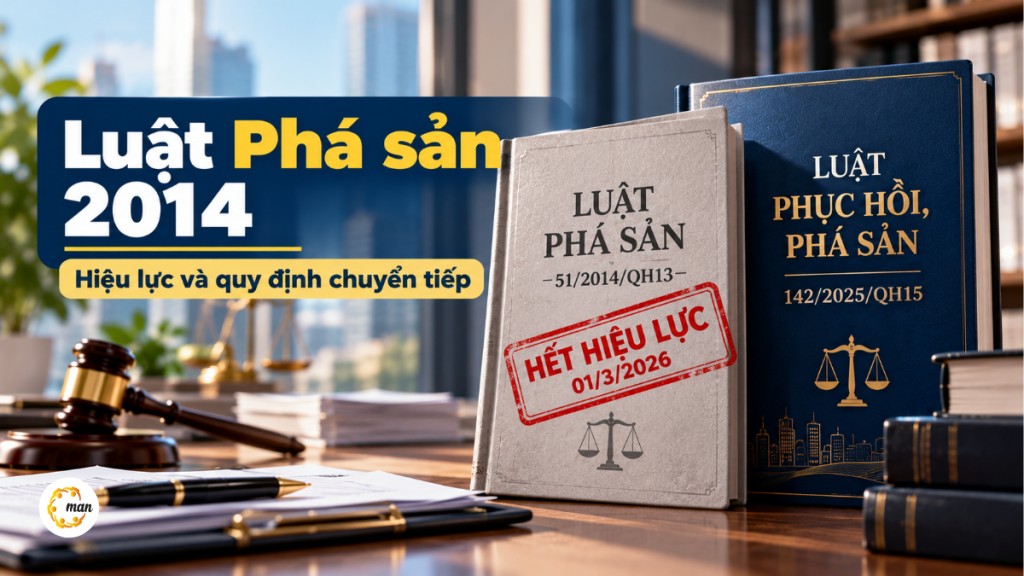
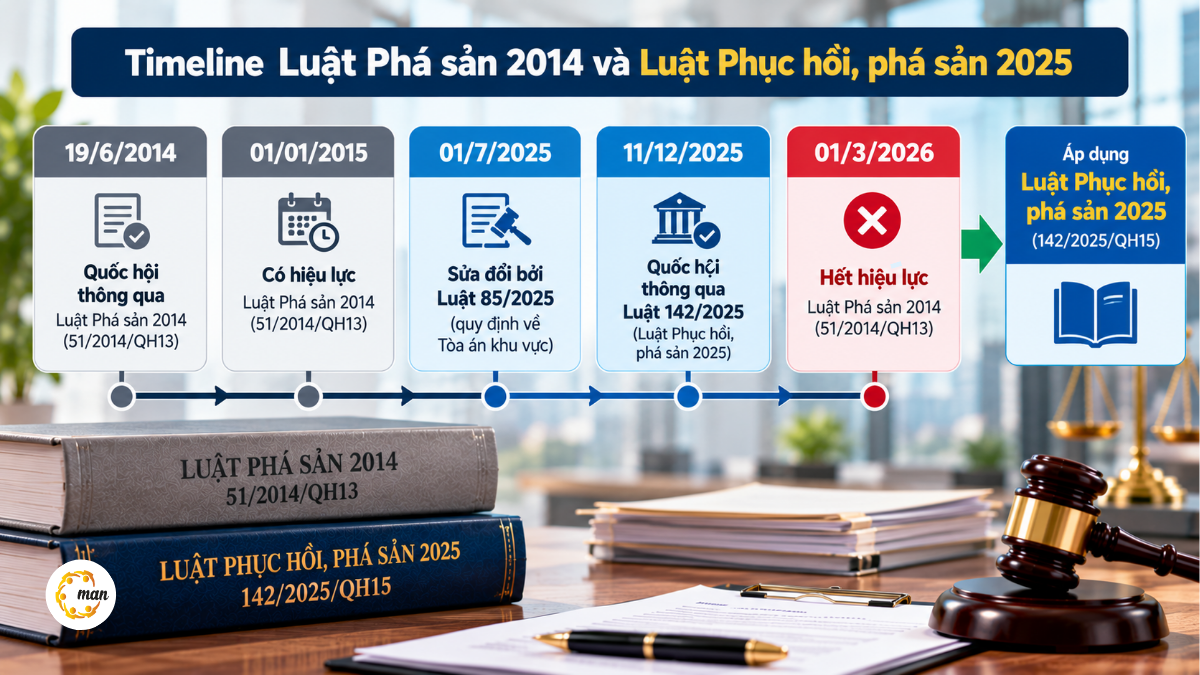
Luật Phá sản 2014 (Luật số 51/2014/QH13) hết hiệu lực từ ngày 01/3/2026 và được thay thế bởi Luật Phục hồi, phá sản 2025 (Luật số 142/2025/QH15). Vụ việc phá sản đã thụ lý trước ngày này nhưng chưa giải quyết xong được tiếp tục giải quyết theo luật mới, trừ hai trường hợp liên quan đến quyết định tuyên bố phá sản đã ban hành theo luật cũ.
Sau hơn 11 năm áp dụng, văn bản này vẫn là căn cứ để hiểu các vụ việc đã giải quyết, các quyết định đang thi hành và các hợp đồng, phán quyết dẫn chiếu luật này. Bài viết được giữ như một trang lưu trữ: tóm tắt thông tin văn bản, giải thích quy định chuyển tiếp cho vụ việc đang dở dang và chỉ ra điều khoản tương ứng trong luật mới.
TÌNH TRẠNG HIỆU LỰC
Luật Phá sản số 51/2014/QH13: HẾT HIỆU LỰC từ ngày 01/3/2026.
- Văn bản thay thế: Luật Phục hồi, phá sản số 142/2025/QH15, hiệu lực từ 01/3/2026.
- Ngoại lệ còn áp dụng luật cũ: thi hành quyết định tuyên bố phá sản ban hành trước 01/3/2026 đang thi hành dở, và đề nghị, kiến nghị theo Điều 113 Luật Phá sản 2014 chưa giải quyết xong (điểm a, b khoản 1 Điều 88 Luật 142/2025/QH15).
- Bài viết là tài liệu lưu trữ, dùng để tra cứu vụ việc cũ. Với vụ việc phát sinh từ 01/3/2026, tra cứu New points in the Bankruptcy Recovery Law 2025.
Luật Phá sản 2014 hết hiệu lực từ ngày 01/3/2026
Theo Điều 87 Luật Phục hồi, phá sản 2025, Luật Phá sản số 51/2014/QH13, đã được sửa đổi, bổ sung một số điều theo Luật số 85/2025/QH15, hết hiệu lực thi hành kể từ ngày 01/3/2026, trừ trường hợp quy định tại điểm a và điểm b khoản 1 Điều 88. Như vậy, từ ngày này, Tòa án không còn thụ lý đơn mới theo luật cũ.
Thông tin văn bản Luật phá sản số 51/2014/QH13
Các thông tin định danh của văn bản được tổng hợp trong bảng dưới đây để thuận tiện khi trích dẫn trong hồ sơ, hợp đồng hoặc văn bản tố tụng.
| Information | Content |
| Document title | Bankruptcy Law |
| Number | 51/2014/QH13 |
| Issuing authority | Quốc hội khóa XIII |
| Ngày thông qua | 19/6/2014 |
| Người ký | Chủ tịch Quốc hội Nguyễn Sinh Hùng |
| Ngày có hiệu lực | 01/01/2015 |
| Văn bản sửa đổi | Luật số 85/2025/QH15 (hiệu lực 01/7/2025) |
| Văn bản hợp nhất | 119/VBHN-VPQH ngày 27/8/2025 của Văn phòng Quốc hội |
| Văn bản hướng dẫn chính | Nghị quyết 03/2016/NQ-HĐTP; Nghị định 22/2015/NĐ-CP về Quản tài viên |
| Ngày hết hiệu lực | 01/3/2026 |
| Văn bản thay thế | Law on Bankruptcy and Recovery No. 142/2025/QH15 |
Toàn văn bản gốc có tại Cổng văn bản Chính phủ and Law Library. Khi dẫn chiếu trong hồ sơ, nên ghi rõ “Luật Phá sản số 51/2014/QH13, đã được sửa đổi, bổ sung bởi Luật số 85/2025/QH15” nếu sự kiện xảy ra trong giai đoạn từ 01/7/2025 đến trước 01/3/2026.
Lần sửa đổi duy nhất năm 2025
Luật số 51/2014/QH13 chỉ được sửa đổi một lần, bởi Luật số 85/2025/QH15 có hiệu lực từ 01/7/2025, đi cùng đợt sắp xếp lại hệ thống Tòa án. Nội dung sửa đổi chính là Điều 8 về thẩm quyền: việc giải quyết phá sản chuyển từ Tòa án nhân dân cấp huyện, cấp tỉnh sang Tòa án nhân dân khu vực nơi doanh nghiệp, hợp tác xã có trụ sở chính.
Theo Nghị quyết 81/2025/UBTVQH15 về phạm vi thẩm quyền theo lãnh thổ, việc giải quyết phá sản doanh nghiệp, hợp tác xã trong giai đoạn này được tập trung tại ba Tòa án: Tòa án nhân dân khu vực 2 Hà Nội, Tòa án nhân dân khu vực 1 Đà Nẵng và Tòa án nhân dân khu vực 1 TP. Hồ Chí Minh. Nội dung chi tiết có tại bài jurisdiction to handle bankruptcy proceedings. Đây là lý do nhiều người tìm kiếm cụm “Luật phá sản 2014 sửa đổi, bổ sung 2025”: văn bản hợp nhất 119/VBHN-VPQH chính là bản đầy đủ nhất của Luật Phá sản 2014 trước khi hết hiệu lực.
Quy định chuyển tiếp cho vụ việc phá sản đang giải quyết
Quy định chuyển tiếp nằm tại khoản 1 Điều 88 Luật Phục hồi, phá sản 2025 và được hướng dẫn bởi Nghị quyết 02/2026/NQ-HĐTP ngày 17/4/2026 của Hội đồng Thẩm phán Tòa án nhân dân tối cao (hiệu lực 01/6/2026). Nguyên tắc chung là áp dụng luật mới cho phần việc còn lại, nhưng không làm lại những gì đã làm đúng theo luật cũ.
Nguyên tắc chung: vụ việc dở dang áp dụng luật mới
Vụ việc phá sản đã được Tòa án thụ lý trước ngày 01/3/2026 mà chưa giải quyết xong thì áp dụng Luật Phục hồi, phá sản 2025 để tiếp tục giải quyết. Điều này áp dụng cả với vụ việc do Tòa án cấp huyện, cấp tỉnh thụ lý theo luật cũ trước khi Luật số 85/2025/QH15 có hiệu lực.
Hệ quả thực tế là các quy định mới về Hội nghị chủ nợ, thứ tự phân chia tài sản 7 nhóm, thủ tục điện tử hay quyền hạn của Quản tài viên có thể áp dụng cho các bước còn lại của vụ việc đang dở dang. Doanh nghiệp và chủ nợ vì vậy cần đọc lại vị trí của mình theo Bankruptcy and Recovery Law 2025, không chỉ dựa vào luật cũ.
Hai trường hợp vẫn áp dụng Luật Phá sản 2014
Điểm a và điểm b khoản 1 Điều 88 giữ lại hiệu lực của luật cũ cho hai tình huống liên quan đến quyết định tuyên bố phá sản đã ban hành trước 01/3/2026:
- Thi hành án đang dở dang: cơ quan thi hành án dân sự đang thi hành quyết định tuyên bố phá sản ban hành trước 01/3/2026 mà chưa thi hành xong thì tiếp tục thi hành theo Luật Phá sản 2014.
- Đề nghị, kiến nghị đang chờ giải quyết: đề nghị, kiến nghị đối với quyết định tuyên bố phá sản theo Điều 113 Luật Phá sản 2014 mà đến ngày 01/3/2026 chưa giải quyết xong thì tiếp tục giải quyết theo Luật Phá sản 2014.
Về lệ phí, mức lệ phí phá sản hiện hành tiếp tục được áp dụng cho đến khi Ủy ban Thường vụ Quốc hội có quy định mới.
Thủ tục đã thực hiện không phải làm lại
Nghị quyết 02/2026/NQ-HĐTP làm rõ các trình tự, thủ tục đã thực hiện và văn bản đã ban hành đúng quy định trước ngày 01/3/2026 thì không phải thực hiện lại hoặc sửa đổi theo luật mới. Nghị quyết cũng hướng dẫn cách xử lý khi quyết định tuyên bố phá sản cũ bị xem xét lại. Bảng sau tổng hợp luật áp dụng theo từng tình huống thường gặp:
| Tình huống | Luật áp dụng |
| Đơn nộp và thụ lý từ ngày 01/3/2026 | Bankruptcy and Recovery Law 2025 |
| Vụ việc thụ lý trước 01/3/2026, chưa có quyết định tuyên bố phá sản | Luật Phục hồi, phá sản 2025 cho các bước còn lại |
| Thủ tục, văn bản đã thực hiện đúng luật cũ trước 01/3/2026 | Giữ nguyên, không làm lại |
| Quyết định tuyên bố phá sản trước 01/3/2026, đang thi hành dở | Bankruptcy Law 2014 |
| Quyết định tuyên bố phá sản trước 01/3/2026, cơ quan thi hành án chưa bắt đầu thi hành | Bankruptcy and Recovery Law 2025 |
| Đề nghị, kiến nghị theo Điều 113 Luật Phá sản 2014 chưa giải quyết xong | Bankruptcy Law 2014 |
| Quyết định tuyên bố phá sản cũ bị hủy, Tòa án giải quyết lại | Bankruptcy and Recovery Law 2025 |
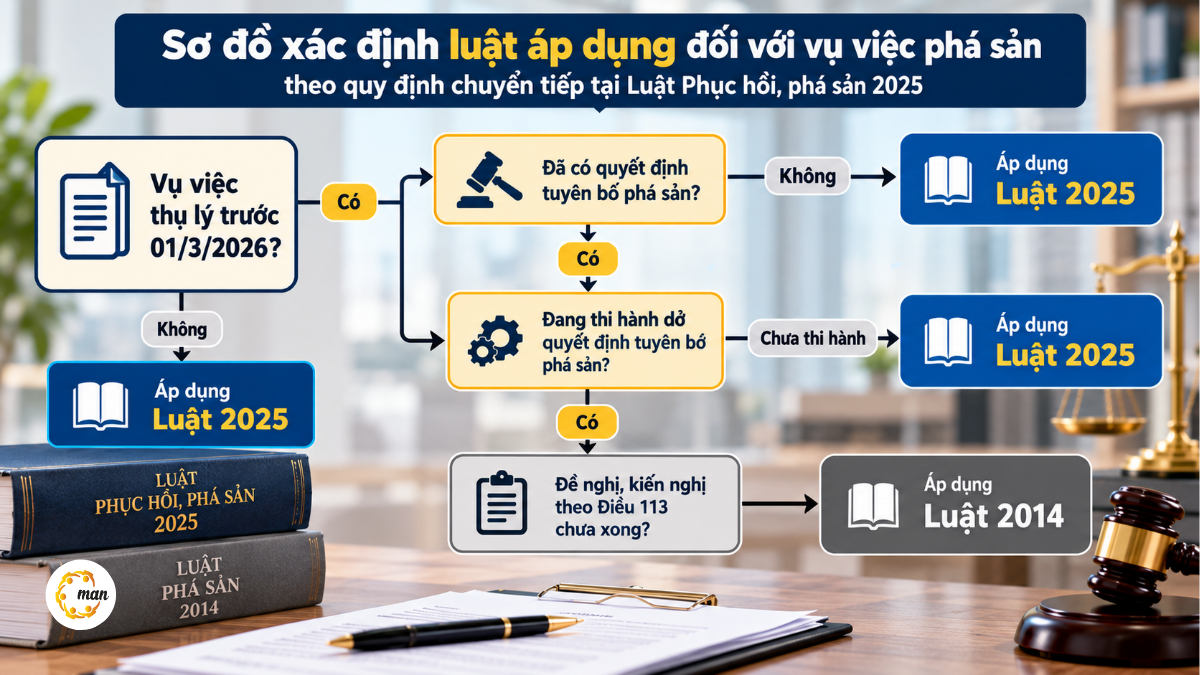
Điểm mấu chốt để xác định luật áp dụng là hai mốc: vụ việc đã có quyết định tuyên bố phá sản hay chưa, và quyết định đó đã được đưa vào thi hành hay chưa. Khi chưa chắc chắn, doanh nghiệp nên đề nghị Tòa án đang thụ lý xác nhận bằng văn bản trước khi thực hiện bước tiếp theo.
Nội dung chính của Luật Phá sản 2014
Luật Phá sản 2014 gồm 14 chương, 133 điều, điều chỉnh thủ tục phá sản của doanh nghiệp, hợp tác xã và liên hiệp hợp tác xã. Bảng dưới đây lưu lại các quy định cốt lõi thường được dẫn chiếu, đặt cạnh quy định tương ứng của luật mới để người đọc biết điều khoản nào đã thay đổi.
| Content | Bankruptcy Law 2014 | Quy định tương ứng tại Luật 2025 |
| Insolvency | Không thực hiện nghĩa vụ thanh toán khoản nợ trong 03 tháng kể từ ngày đến hạn (khoản 1 Điều 4) | Sau 06 tháng kể từ ngày đến hạn; bổ sung khái niệm “nguy cơ mất khả năng thanh toán” (Điều 5) |
| The applicant | Chủ nợ không bảo đảm, người lao động, công đoàn, doanh nghiệp, chủ sở hữu, cổ đông (Điều 5) | Bổ sung cơ quan quản lý thuế, cơ quan bảo hiểm xã hội (Điều 38) |
| Competence | Tòa án cấp huyện, cấp tỉnh; từ 01/7/2025 là Tòa án nhân dân khu vực (Điều 8) | Tòa án nhân dân khu vực (Điều 6) |
| Creditors' meeting | Hợp lệ khi chủ nợ tham gia đại diện ít nhất 51% tổng số nợ không có bảo đảm; nghị quyết thông qua khi quá nửa số chủ nợ không có bảo đảm có mặt và đại diện từ 65% tổng số nợ không có bảo đảm tán thành | Nghị quyết thông qua khi chủ nợ đại diện từ 65% tổng số nợ của chủ nợ tham gia biểu quyết tán thành |
| Business recovery | Một giai đoạn trong thủ tục phá sản (Chương VIII) | Thủ tục độc lập (Chương II) |
| Simplified procedure | Chỉ áp dụng cho phá sản (Điều 105) | Áp dụng cả phục hồi và phá sản, thời hạn bằng một nửa (Điều 68–71) |
| Invalid transaction | Giao dịch trong 06 tháng trước ngày mở thủ tục; 18 tháng nếu với người liên quan (Điều 59) | Đối chiếu Luật 2025 |
| Thứ tự phân chia tài sản | 4 nhóm, nghĩa vụ với Nhà nước cùng nhóm chủ nợ không bảo đảm (Điều 54) | 7 nhóm, nghĩa vụ với Nhà nước đứng trước chủ nợ không bảo đảm (Điều 46) |
| Receiver | Luật sư, kiểm toán viên, người có trình độ cử nhân luật, kinh tế, kế toán, tài chính, ngân hàng có 05 năm kinh nghiệm; chứng chỉ do Bộ Tư pháp cấp (Điều 12) | Chứng chỉ do Chủ tịch UBND cấp tỉnh cấp, bắt buộc khóa bồi dưỡng nghề (Nghị định 65/2026/NĐ-CP) |
| Cấm đảm nhiệm chức vụ | Người quản lý có lỗi bị cấm thành lập, quản lý doanh nghiệp 03 năm (Điều 130) | Tiếp tục quy định 03 năm (Điều 84) |
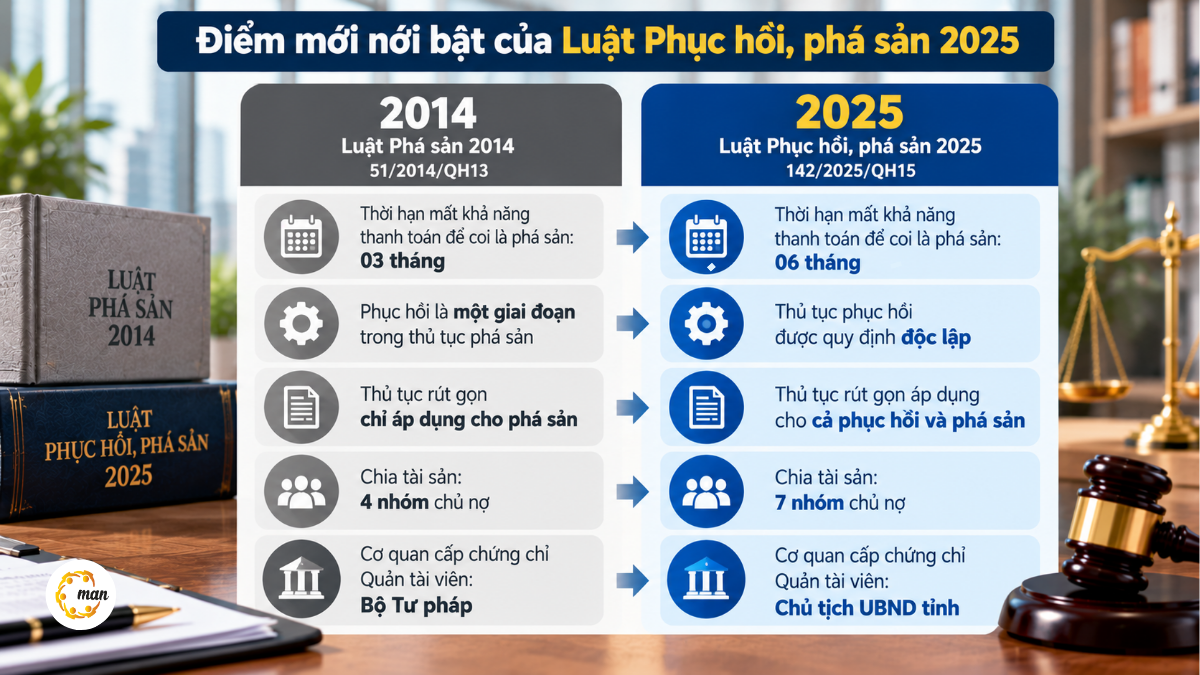
Bảng chỉ mang tính tra cứu nhanh. Với vụ việc cụ thể, cần đối chiếu nguyên văn điều luật tại văn bản hợp nhất 119/VBHN-VPQH và văn bản thay thế. Trình tự các bước theo luật mới được trình bày đầy đủ tại bài bankruptcy proceedings.
Luật Phục hồi, phá sản 2025 thay thế Luật Phá sản 2014 như thế nào
Luật Phục hồi, phá sản 2025 không sửa đổi mà thay thế toàn bộ luật cũ, với 8 chương, 88 điều, được Quốc hội thông qua ngày 11/12/2025. Thay đổi lớn nhất là tách phục hồi thành thủ tục riêng, cho phép doanh nghiệp nộp đơn ngay khi mới có nguy cơ mất khả năng thanh toán.
Ba nhóm thay đổi có tác động trực tiếp nhất đến doanh nghiệp và chủ nợ là: thủ tục phục hồi độc lập với Hội nghị chủ nợ biểu quyết theo số nợ của chủ nợ tham gia (xem phục hồi hoạt động kinh doanh); vai trò mới của Quản tài viên trong giai đoạn phục hồi (xem vai trò của Quản tài viên); và việc ngân sách nhà nước bảo đảm tạm ứng chi phí khi người lao động, cơ quan thuế, bảo hiểm xã hội nộp đơn.
Đi kèm luật mới là hệ thống văn bản hướng dẫn thay thế các văn bản cũ: Nghị quyết 02/2026/NQ-HĐTP thay cho Nghị quyết 03/2016/NQ-HĐTP, Nghị định 65/2026/NĐ-CP thay cho Nghị định 22/2015/NĐ-CP về Quản tài viên, cùng Decree 64/2026/ND-CP về thi hành quyết định tuyên bố phá sản. Toàn văn luật mới được lưu tại trang toàn văn Luật Phục hồi, phá sản 2025.
Doanh nghiệp và chủ nợ cần làm gì với vụ việc chuyển tiếp
Từ kinh nghiệm hỗ trợ các vụ việc phá sản, đội ngũ MAN – Master Accountant Network thấy rủi ro lớn nhất trong giai đoạn chuyển tiếp không nằm ở việc chọn sai luật, mà ở việc bỏ lỡ quyền mới mà luật 2025 trao cho các bên. Doanh nghiệp, chủ nợ có vụ việc đang dở dang nên rà soát bốn việc sau:
- Xác định vụ việc đang ở giai đoạn nào: chưa có quyết định tuyên bố phá sản, đã có quyết định nhưng chưa thi hành, hay đang thi hành dở. Mỗi giai đoạn áp dụng một luật khác nhau.
- Kiểm tra lại vị trí của khoản nợ theo thứ tự phân chia tài sản 7 nhóm nếu vụ việc chưa có quyết định tuyên bố phá sản, vì nghĩa vụ với Nhà nước nay được trả trước chủ nợ không có bảo đảm.
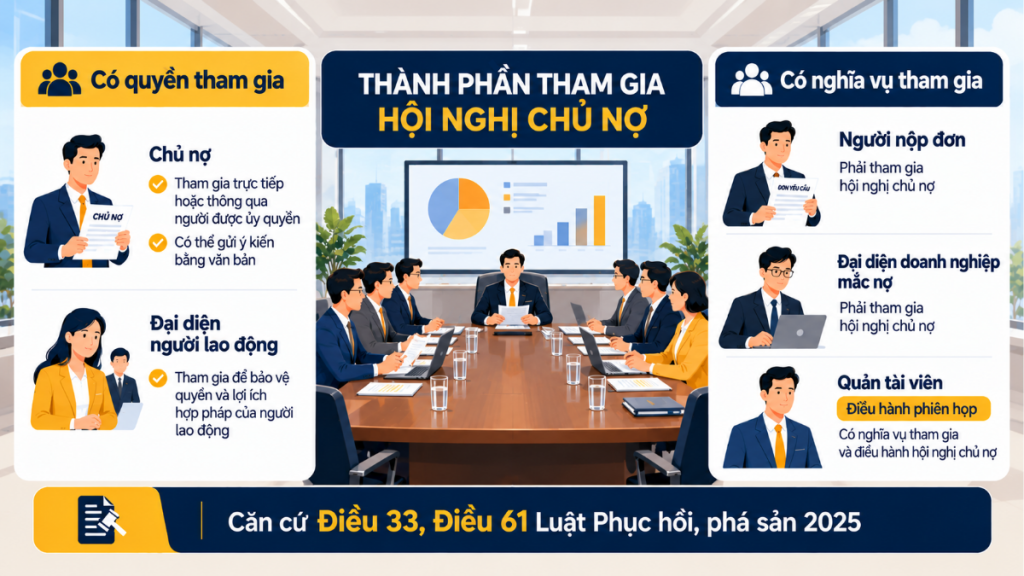
- Với chủ nợ, tham gia đầy đủ Creditors' meeting còn lại của vụ việc, vì tỷ lệ thông qua nay tính trên số nợ của chủ nợ tham gia biểu quyết.
- Với doanh nghiệp còn khả năng hoạt động, cân nhắc đề xuất phương án phục hồi theo cơ chế mới thay vì đi tiếp đến tuyên bố phá sản.
Nếu doanh nghiệp vẫn đủ tài sản trả hết nợ, giải thể thường là lựa chọn nhanh và ít tốn kém hơn. Bài Comparison of business dissolution and bankruptcy giúp xác định hướng đi phù hợp.
Conclude
Luật Phá sản 2014, số 51/2014/QH13, đã hết hiệu lực từ ngày 01/3/2026 sau hơn 11 năm áp dụng và một lần sửa đổi năm 2025 về thẩm quyền Tòa án. Luật cũ chỉ còn áp dụng cho việc thi hành quyết định tuyên bố phá sản đang dở dang và các đề nghị, kiến nghị theo Điều 113 chưa giải quyết xong. Mọi vụ việc còn lại, kể cả vụ việc thụ lý trước 01/3/2026, tiếp tục theo Luật Phục hồi, phá sản 2025.
Với người đang xử lý một vụ việc cũ, luật này vẫn là tài liệu tham chiếu cần thiết. Với mọi quyết định mới, căn cứ đúng là luật 2025 và các văn bản hướng dẫn năm 2026.
MAN – Master Accountant Network hỗ trợ doanh nghiệp và chủ nợ rà soát vụ việc phá sản đang dở dang, xác định luật áp dụng, chuẩn bị hồ sơ và tham gia Hội nghị chủ nợ qua dịch vụ tư vấn phá sản doanh nghiệp trọn gói.
References
- Luật Phá sản số 51/2014/QH13; Luật số 85/2025/QH15; văn bản hợp nhất 119/VBHN-VPQH ngày 27/8/2025
- Luật Phục hồi, phá sản số 142/2025/QH15: Điều 87, 88
- Nghị quyết 02/2026/NQ-HĐTP ngày 17/4/2026 (hiệu lực 01/6/2026)
- Nghị quyết 81/2025/UBTVQH15; Nghị định 64/2026, 65/2026/NĐ-CP
Professional license: CPA Vietnam Auditors
Experience: Over 30 years of experience in Accounting, Auditing, and Financial Consulting.
Câu hỏi thường gặp về Luật Phá sản 2014
Luật Phá sản 2014 còn hiệu lực không?
Không. Luật Phá sản số 51/2014/QH13 hết hiệu lực từ ngày 01/3/2026, trừ hai trường hợp: thi hành quyết định tuyên bố phá sản ban hành trước ngày này đang thi hành dở, và đề nghị, kiến nghị theo Điều 113 chưa giải quyết xong.
Luật phá sản 2025 là luật nào?
Đó là Luật Phục hồi, phá sản số 142/2025/QH15, được Quốc hội thông qua ngày 11/12/2025 và có hiệu lực từ 01/3/2026. Luật này thay thế toàn bộ luật cũ, không phải văn bản sửa đổi.
Luật phá sản 2014 sửa đổi, bổ sung 2025 là văn bản nào?
Đó là Luật số 85/2025/QH15 có hiệu lực từ 01/7/2025, sửa đổi Điều 8 về thẩm quyền của Tòa án. Bản hợp nhất đầy đủ là văn bản hợp nhất 119/VBHN-VPQH ngày 27/8/2025 của Văn phòng Quốc hội.
Vụ việc thụ lý năm 2025 nhưng chưa xong thì áp dụng luật nào?
Áp dụng Luật Phục hồi, phá sản 2025 cho các bước còn lại. Các thủ tục, văn bản đã thực hiện đúng Luật Phá sản 2014 trước ngày 01/3/2026 không phải làm lại.