

Nghị định 168/2025/NĐ-CP do Chính phủ ban hành ngày 30/6/2025, có hiệu lực từ ngày 01/7/2025, quy định chi tiết về đăng ký doanh nghiệp, đăng ký chi nhánh, văn phòng đại diện, địa điểm kinh doanh, hộ kinh doanh và thay thế Nghị định 01/2021/NĐ-CP. Ngày 23/7/2026, Nghị định 296/2026/NĐ-CP sửa đổi một số điều, trong đó có khoản 3 Điều 64 về hồ sơ giải thể.
Tổng quan Nghị định 168/2025/NĐ-CP
According to toàn văn Nghị định 168/2025/NĐ-CP, văn bản quy định chi tiết Luật Doanh nghiệp năm 2020 và các sửa đổi năm 2025 về hồ sơ, trình tự đăng ký doanh nghiệp, hộ kinh doanh, đăng ký qua mạng, chia sẻ dữ liệu và quản lý nhà nước về đăng ký kinh doanh. Một số nội dung nền tảng doanh nghiệp cần nắm gồm:
- Cơ quan đăng ký kinh doanh (Điều 20): cấp tỉnh là cơ quan thuộc Sở Tài chính, riêng doanh nghiệp trong khu công nghệ cao do Ban Quản lý khu công nghệ cao thực hiện; cấp xã thực hiện đăng ký hộ kinh doanh.
- Đăng ký qua mạng (Điều 37, 38): sử dụng tài khoản định danh điện tử trên Cổng thông tin quốc gia về đăng ký doanh nghiệp; hồ sơ điện tử có giá trị pháp lý tương đương hồ sơ giấy.
- Giấy tờ cá nhân (Điều 11): người đã có số định danh cá nhân không phải nộp bản sao giấy tờ pháp lý cá nhân.
- Con dấu (khoản 5 Điều 4): doanh nghiệp không phải đóng dấu trên giấy đề nghị, biên bản họp, nghị quyết, quyết định trong hồ sơ đăng ký.
Điểm mới so với Nghị định 01/2021/NĐ-CP
Nghị định 168/2025/NĐ-CP thay thế Nghị định 01/2021/NĐ-CP từ ngày 01/7/2025. Bảng sau tóm tắt một số khác biệt chính mà doanh nghiệp hay gặp khi làm thủ tục.
| Content | Decree 01/2021/ND-CP | Decree 168/2025/ND-CP |
| Chủ sở hữu hưởng lợi | Chưa quy định | Phải xác định, kê khai, lưu giữ (Điều 17 đến 19) |
| Cơ quan đăng ký cấp tỉnh | Phòng Đăng ký kinh doanh thuộc Sở Kế hoạch và Đầu tư | Cơ quan đăng ký kinh doanh thuộc Sở Tài chính |
| Đăng ký qua mạng | Chữ ký số hoặc tài khoản đăng ký kinh doanh | Tài khoản định danh điện tử |
| Giấy tờ cá nhân | Nộp bản sao giấy tờ pháp lý | Không cần nếu đã kê khai số định danh cá nhân |
| Tình trạng pháp lý đơn vị phụ thuộc | Ít trạng thái | Bổ sung tình trạng cho chi nhánh, văn phòng đại diện, địa điểm kinh doanh (Điều 36) |
Do Nghị định 01/2021/NĐ-CP đã hết hiệu lực từ ngày 01/7/2025, các hồ sơ nộp từ thời điểm này cần dẫn căn cứ Nghị định 168/2025/NĐ-CP. Tóm tắt văn bản cũ có tại bài Decree 01/2021/ND-CP.
Đăng ký chi nhánh, văn phòng đại diện và địa điểm kinh doanh
Theo Điều 30 Nghị định 168/2025/NĐ-CP, trong 10 ngày kể từ ngày quyết định thành lập chi nhánh, văn phòng đại diện hoặc quyết định lập địa điểm kinh doanh, doanh nghiệp gửi hồ sơ đến cơ quan đăng ký kinh doanh cấp tỉnh nơi đặt đơn vị đó. Trong 03 ngày làm việc kể từ ngày nhận hồ sơ hợp lệ, cơ quan đăng ký cấp giấy chứng nhận đăng ký hoạt động chi nhánh, văn phòng đại diện hoặc cập nhật thông tin địa điểm kinh doanh, theo hướng dẫn của Law Library.
| Đơn vị | Hồ sơ chính | Lưu ý |
| Branches, representative offices | Thông báo thành lập; bản sao quyết định và biên bản họp về việc thành lập | Không cần bản sao giấy tờ cá nhân người đứng đầu nếu kê khai số định danh |
| Địa điểm kinh doanh | Thông báo lập địa điểm kinh doanh | Lập tại địa chỉ khác trụ sở chính hoặc chi nhánh; có thể đề nghị cấp giấy chứng nhận đăng ký địa điểm |
| Chi nhánh, văn phòng đại diện ở nước ngoài | Thông báo kèm bản sao giấy tờ tương đương của nước sở tại | Thông báo trong 30 ngày kể từ ngày chính thức lập |
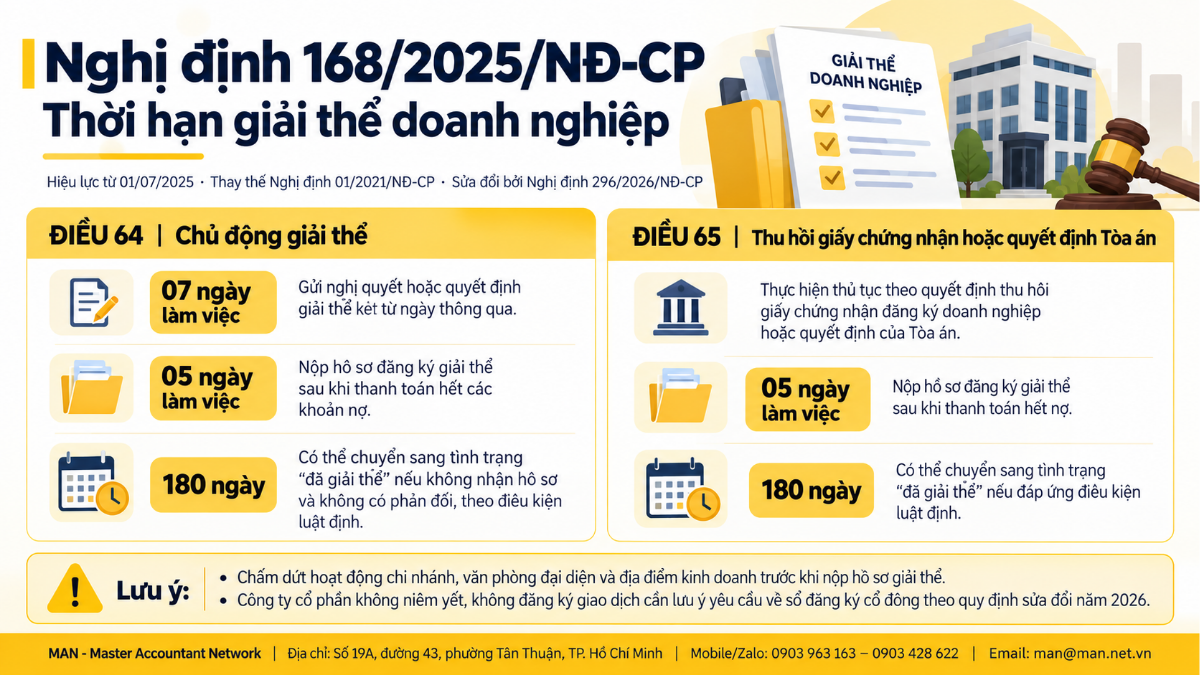
Khi doanh nghiệp giải thể, toàn bộ chi nhánh, văn phòng đại diện và địa điểm kinh doanh phải chấm dứt hoạt động trước khi nộp hồ sơ đăng ký giải thể theo khoản 4 Điều 64.
Sửa đổi bởi Nghị định 296/2026/NĐ-CP
Decree 296/2026/ND-CP ban hành ngày 23/7/2026 và có hiệu lực từ ngày ban hành, sửa đổi một số điều của Nghị định 168/2025/NĐ-CP. Các thay đổi đáng chú ý gồm:
| Content | Điểm mới |
| Chủ sở hữu hưởng lợi (Điều 17) | Ngưỡng 25% tính cả sở hữu trực tiếp, gián tiếp; gộp nhóm gia đình; mọi thành viên hợp danh; phương án cuối là người quản lý có quyền hạn lớn nhất |
| Góp vốn (Điều 4) | Cấm đứng tên thay người khác góp vốn |
| Đăng ký qua mạng (Điều 39) | Đăng nhập qua Cổng Dịch vụ công quốc gia hoặc ứng dụng định danh; bổ sung xác thực điện tử |
| Tạm ngừng kinh doanh (Điều 60) | Tổng thời gian tạm ngừng liên tiếp không quá 24 tháng; không xác nhận tiếp tục và không báo cáo trong 06 tháng thì bị thu hồi giấy chứng nhận, phải giải thể theo Điều 65 |
| Giải thể (khoản 3 Điều 64) | Công ty cổ phần không niêm yết, không đăng ký giao dịch phải nộp kèm bản sao sổ đăng ký cổ đông; thông tin cổ đông được lưu 06 năm sau giải thể (khoản 8a Điều 21) |
Quy định tạm ngừng mới có liên hệ trực tiếp với giải thể, doanh nghiệp đang hoặc sắp temporarily suspend business cần theo dõi mốc xác nhận tiếp tục hoạt động.
Điều 64 Nghị định 168/2025/NĐ-CP quy định gì
Điều 64 quy định trình tự, thủ tục đăng ký giải thể với các trường hợp tại điểm a, b, c khoản 1 Điều 207 Luật Doanh nghiệp, gồm hết thời hạn hoạt động mà không gia hạn, giải thể theo nghị quyết, quyết định của chủ sở hữu, Hội đồng thành viên, Đại hội đồng cổ đông, hoặc không đủ số lượng thành viên, cổ đông tối thiểu trong 06 tháng liên tục. Doanh nghiệp chỉ được giải thể khi đã thanh toán hết các khoản nợ, nghĩa vụ tài sản và không trong quá trình giải quyết tranh chấp, xem thêm conditions for dissolving a business.
Khoản 1 Điều 64 Nghị định 168/2025/NĐ-CP
Khoản 1 Điều 64 yêu cầu trong 07 ngày làm việc kể từ ngày thông qua nghị quyết, quyết định giải thể, doanh nghiệp gửi cơ quan đăng ký kinh doanh cấp tỉnh nghị quyết hoặc quyết định giải thể, bản sao biên bản họp đối với công ty TNHH hai thành viên trở lên, công ty cổ phần, công ty hợp danh, và phương án giải quyết nợ nếu có.
Các bước tiếp theo theo khoản 2 đến khoản 8
Sau khi nhận nghị quyết, quyết định giải thể, các bước tiếp theo được thực hiện như sau:
- Khoản 2: trong 03 ngày làm việc, cơ quan đăng ký kinh doanh đăng tải thông tin, chuyển tình trạng doanh nghiệp sang “đang làm thủ tục giải thể”, chuyển đơn vị phụ thuộc sang “đang làm thủ tục chấm dứt hoạt động” và gửi thông tin cho cơ quan thuế, cơ quan thi hành án dân sự.
- Khoản 3: trong 05 ngày làm việc kể từ ngày thanh toán hết nợ, doanh nghiệp nộp hồ sơ đăng ký giải thể; mẫu thông báo áp dụng theo Mẫu số 30 Thông tư 121/2026/TT-BTC.
- Khoản 4: chấm dứt hoạt động toàn bộ chi nhánh, văn phòng đại diện, địa điểm kinh doanh trước khi nộp hồ sơ.
- Khoản 5: cơ quan thuế có 02 ngày làm việc để gửi ý kiến; nếu không có ý kiến phản đối, cơ quan đăng ký kinh doanh chuyển tình trạng “đã giải thể” trong 05 ngày làm việc.
- Khoản 6, 7: sau 180 ngày kể từ ngày nhận nghị quyết mà không có hồ sơ và không có phản đối, doanh nghiệp được chuyển “đã giải thể”; trong thời hạn này doanh nghiệp có thể hủy nghị quyết, quyết định giải thể.
- Khoản 8: doanh nghiệp trả con dấu và giấy chứng nhận mẫu dấu cho cơ quan công an nếu đã đăng ký mẫu dấu tại đây.
Hồ sơ giai đoạn này gồm thông báo giải thể, báo cáo thanh lý tài sản, danh sách chủ nợ và số nợ đã thanh toán gồm nợ thuế, bảo hiểm, và bản sao sổ đăng ký cổ đông với công ty cổ phần không niêm yết theo sửa đổi năm 2026. Chi tiết từng giấy tờ có tại bài business dissolution documents.
Điều 65 về giải thể khi bị thu hồi giấy chứng nhận hoặc theo quyết định Tòa án
Điều 65 áp dụng khi doanh nghiệp bị thu hồi Giấy chứng nhận đăng ký doanh nghiệp hoặc giải thể theo quyết định của Tòa án. Trong 03 ngày làm việc kể từ ngày có quyết định, cơ quan đăng ký kinh doanh đăng tải và chuyển tình trạng “đang làm thủ tục giải thể”; trường hợp thu hồi theo đề nghị của cơ quan thuế thì không thực hiện bước này. Người đại diện theo pháp luật nộp hồ sơ trong 05 ngày làm việc kể từ ngày thanh toán hết nợ, áp dụng khoản 3, 4, 5 Điều 64. Sau 180 ngày kể từ ngày thông báo mà không có hồ sơ và không có phản đối, doanh nghiệp được chuyển “đã giải thể”.
So sánh Điều 64 và Điều 65
| Criteria | Điều 64 | Điều 65 |
| Case | Điểm a, b, c khoản 1 Điều 207 Luật Doanh nghiệp | Bị thu hồi giấy chứng nhận hoặc theo quyết định Tòa án |
| Khởi xướng | Doanh nghiệp thông qua nghị quyết, quyết định | Quyết định thu hồi hoặc quyết định Tòa án |
| Mốc 180 ngày tính từ | Ngày nhận nghị quyết, quyết định giải thể | Ngày thông báo tình trạng đang làm thủ tục giải thể |
| Hủy quyết định giải thể | Được, trong 180 ngày (khoản 7) | Not applicable |
Mốc thời gian cần nhớ khi giải thể
Các mốc thời hạn trong Điều 64 và Điều 65 được tóm tắt trong bảng sau; cách tính và hệ quả khi chậm nộp được phân tích thêm tại bài deadline for submitting dissolution documents.
| Mold | Content | Căn cứ |
| 7 working days | Send the resolution/decision on dissolution. | Khoản 1 Điều 64 |
| 3 working days | Chuyển tình trạng đang làm thủ tục giải thể | Khoản 2 Điều 64; khoản 1 Điều 65 |
| 05 working days | Nộp hồ sơ đăng ký giải thể sau khi thanh toán hết nợ | Khoản 3 Điều 64; khoản 2 Điều 65 |
| 2 working days | Cơ quan thuế gửi ý kiến | Khoản 5 Điều 64 |
| 05 working days | Chuyển tình trạng đã giải thể | Khoản 5 Điều 64 |
| 180 days | Tự động chuyển đã giải thể nếu không có hồ sơ và không phản đối | Khoản 6 Điều 64; khoản 3 Điều 65 |
Lưu ý của MAN khi áp dụng Nghị định 168/2025/NĐ-CP
Từ các hồ sơ đăng ký doanh nghiệp và giải thể thực tế, đội ngũ MAN – Master Accountant Network lưu ý một số điểm sau:
- Xử lý thuế trước. Ý kiến của cơ quan thuế quyết định việc chuyển “đã giải thể”, nên doanh nghiệp cần hoàn tất Tax obligations upon dissolution trước khi nộp hồ sơ giai đoạn hai. Doanh nghiệp đang ở trạng thái 06 trên hệ thống thuế phải xử lý mã số thuế trước.
- Chấm dứt đơn vị phụ thuộc sớm. Chi nhánh, địa điểm kinh doanh ở tỉnh khác thường kéo dài thời gian vì phải quyết toán thuế riêng, nên cần làm trước.
- Chuẩn bị sổ đăng ký cổ đông. Công ty cổ phần không niêm yết phải cập nhật sổ đăng ký cổ đông trước khi giải thể theo sửa đổi năm 2026.
- Không nhầm giải thể với phá sản. Doanh nghiệp không thanh toán được hết nợ không đủ điều kiện giải thể mà phải xem xét thủ tục phá sản.
Trình tự đầy đủ từ chuẩn bị đến hoàn tất được hướng dẫn tại bài Instructions for dissolving a business; doanh nghiệp cần hỗ trợ trọn gói có thể tham khảo business dissolution services của MAN.
Conclude
Nghị định 168/2025/NĐ-CP là văn bản nền tảng về đăng ký doanh nghiệp từ ngày 01/7/2025, thay thế Nghị định 01/2021/NĐ-CP và đã được sửa đổi bởi Nghị định 296/2026/NĐ-CP. Ngoài các quy định về chi nhánh, địa điểm kinh doanh và chủ sở hữu hưởng lợi, Điều 64, 65 là căn cứ trực tiếp cho thủ tục giải thể với các mốc 07, 03, 05 ngày làm việc và 180 ngày. Doanh nghiệp nên đối chiếu văn bản hợp nhất mới nhất trước khi nộp hồ sơ.
Professional license: CPA Vietnam Auditors
Experience: Over 30 years of experience in Accounting, Auditing, and Financial Consulting.
Frequently Asked Questions
Nghị định 168/2025/NĐ-CP có hiệu lực khi nào?
Nghị định 168/2025/NĐ-CP được Chính phủ ban hành ngày 30/6/2025 và có hiệu lực từ ngày 01/7/2025, thay thế Nghị định 01/2021/NĐ-CP về đăng ký doanh nghiệp.
Is Decree 01/2021/ND-CP still in effect?
Không. Nghị định 01/2021/NĐ-CP đã được thay thế bởi Nghị định 168/2025/NĐ-CP từ ngày 01/7/2025.
Khoản 1 Điều 64 Nghị định 168 yêu cầu gì?
Trong 07 ngày làm việc kể từ ngày thông qua nghị quyết, quyết định giải thể, doanh nghiệp gửi cơ quan đăng ký kinh doanh cấp tỉnh nghị quyết hoặc quyết định giải thể, bản sao biên bản họp (nếu có) và phương án giải quyết nợ (nếu có).
Thời hạn thông báo lập địa điểm kinh doanh là bao lâu?
Theo Điều 30 Nghị định 168/2025/NĐ-CP, doanh nghiệp gửi thông báo trong 10 ngày kể từ ngày quyết định lập địa điểm kinh doanh; cơ quan đăng ký cập nhật thông tin trong 03 ngày làm việc kể từ ngày nhận hồ sơ hợp lệ.